Products to help you reduce your CO2 emissions
Smart Plugs
Smart plugs allow you to automate power switching, making them a really useful tool to support reducing your CO2 emissions. This area of smart automation has also become very competitive, which has both resulted in keen pricing, which is a good thing, but also encouraged a large number of new and unfamiliar brands to enter the market. Selecting a suitable device can therefore seem quite a daunting task at first, however, once some clear criteria are established, some clear winners emerge.
1. Smartphone app
All the smart plugs are initially setup and controlled with an app on your smartphone. So the first criteria is that any smart plug must be supported by both android and apple devices. All apps should allow for multiple on/off schedules
to be readily established, and also for multiple devices to be grouped together. If you have more than one smart plug, grouping makes it possible to switch several devices simultaneously with only one command or schedule.
Be
aware that each manufacturer has their own app, and that these app will almost always only work with their smart plugs. This means that if you buy smart plugs from several different manufacturers, you will need to have just as
many different applications on your phone. If you are in this position, one of the ways you can reduce the inconvenience of this is to use one of the home automation platforms.
2. Integration with home automation platforms
Whilst the smartphone applications are fully capable of controlling the smart plugs by themseleves, the ability for them to be integrated into an overall home automation system can bring some additional conviniences. With an appropriate
hub, plugs can be operated with voice commands or linked to other smart devices or services. For example, with geofencing, all the plugs could be switched off when the platform detects that your phone has left the house and devices,
such as TVs, games consoles and music systems, can all be turned on and off with a single voice command, rather than you always having to have your phone with you in order to use the app.
The two most popular
platforms are Amazon's Alexa and Google's Nest. Both offer similar functionality and have hubs that offer additional services as well as being able to free you up from needing your phone to operate
any smart devices.
For those more advanced users, the ability to integrate with IFTTT (If This Then That) will bring additional benefits, and finally for those that want
to avoid using the commercial platforms, support within the two most popular open source platforms openHAB and Home Automation will be a requirement
too. These platforms can also allow suitable devices to have no contact outside your home network at all, further removing some of the security concerns that some have with the growing number of devices in our homes that can directly
connect to the internet.
Just for completeness, it is worth mentioning the excellent Homekit platform from Apple. It is difficult to recommend this above Alexa and Nest at the time of writing it is
a much more restrictive platform, only supporting voice control through an iOS device (iPhone, iPad), remote automation through Apple TV and only a single smart plug, from Eve Energy, but if you do already have some of these
devices, then it is certainly worth considering.
3. Size
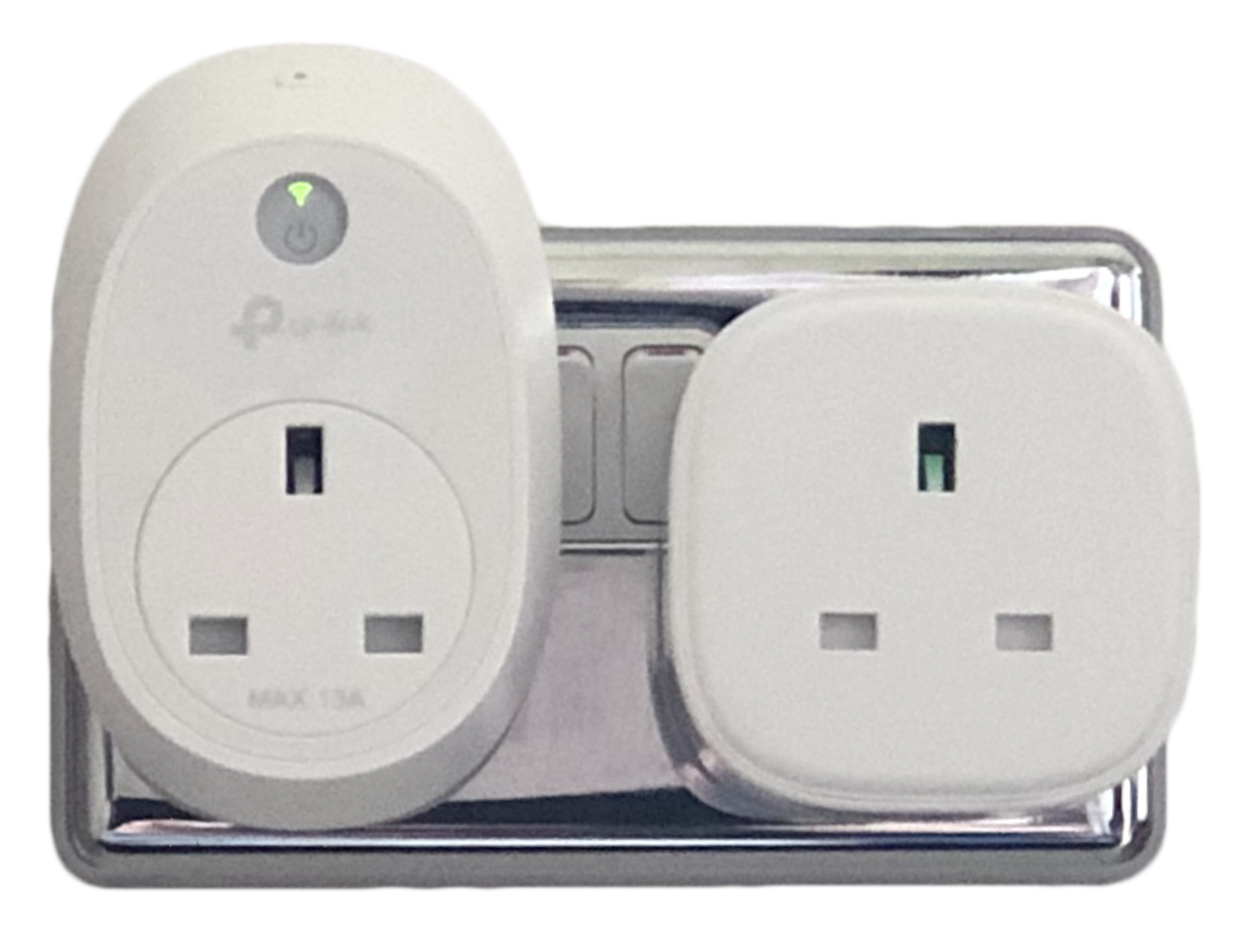
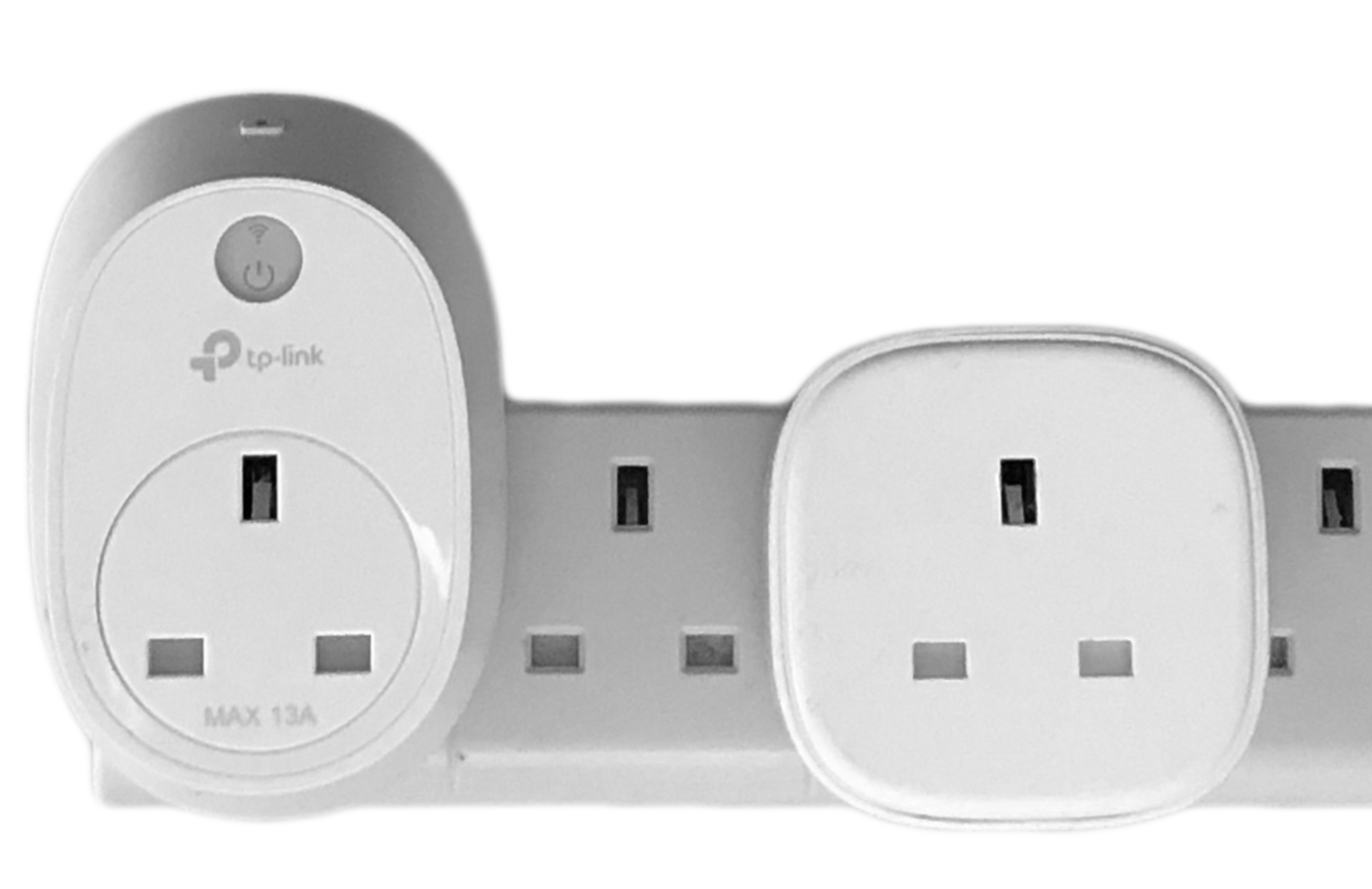
Smart plugs are necessarily larger than normal plugs and this is worth bearing in mind when you are choosing one. If you are planning on using them in a standard switched wall outlet, then the increased size should not be a
problem, even if you use two side by side (there may be some obscuring of the outlet switches, but this should not be an issue). If however you want to use them with a non-individually switched socket strip, or a multi-plug,
then the increased size may make this difficult, either preventing you from using adjacent sockets or restricting which socket can be used.
Some narrow smart plugs are available, but check the dimensions to make
sure they are suitable for your application and be aware that the manual switches (to turn them on and off without using the app) are located on the sides and may not be readily accessible.
4. Energy monitoring
A useful feature is the ability to monitor the power being consumed by the attached devices. This allows you to better uderstand how your devices are using energy and helps you to judge better how and when they should be used. Both the instantaneous and historical consumptions should be availble to review.
Product recommendations
Listed below are selected products currently on sale that best fit the above criteria. Two options are presented in each of the main product categories. Whilst all will work well, the recommended option is what I would consider to represent the best available in the category, whilst the lower cost option may sacrifice some features, with the principal differences being highlighted in the descriptions.
The best smart plug with energy monitoring
Recommended
- TP-Link HS110
- Apps for both android and iOS
- Works with Alexa, Nest & IFTTT
- Integrations available for openHAB and Home Assistant
- Dimensions 100.3 x 66.3 x 77 (HxWxD in mm excluding prongs)
- Manual switch on top
- 13A maximum load
Lower cost option
- Meross MSS310
- Apps for both android and iOS
- Works with Alexa, Nest & IFTTT
- Dimensions 67 x 67 x 48 (HxWxD in mm excluding prongs)
- Manual switch on top
- 13A maximum load
The best narrow width smart plug without energy monitoring
Smaller plugs that don't block adjacent sockets
Recommended
- TP-Link KP105
- Apps for both android and iOS
- Works with Alexa, Nest & IFTTT
- Integrations available for openHAB and Home Assistant
- Dimensions 72.5 x 51.5 x 37.5 (HxWxD in mm excluding prongs)
- Manual switch on side
- 13A maximum load
Lower cost option
- Tapo P100
- Apps for both android and iOS
- Works with Alexa & Nest
- Dimensions 72 x 51 x 40 (HxWxD in mm excluding prongs)
- Manual switch on side
- 13A maximum load
The best smart power strip
A solution for controlling multiple appliances from a single socket
Recommended
- TP-Link KP303
- 3 Smart Outlets + 2 USB Ports – Supports 5 appliances simultaneously with 3 independently controllable smart outlets and 2 always-on USB ports
- Apps for both android and iOS
- Works with Alexa, Nest & IFTTT
- Manual switch for each outlet
- 13A maximum total load
Lower cost option
- Meross Power Strip
- 4 Smart Outlets –
Supports 4 appliances simultaneously with 4 independently controllable smart outlets - Apps for both android and iOS
- Works with Alexa, Nest & IFTTT
- Single manual switch to for all outlets
- 10A maximum load
Smart plug for Apple Homekit only
Eve Energy -( view more details at eve )
- App for iOS only
- Energy monitoring
- Dimensions 55 x 55 x 48 (HxWxD in mm excluding prongs)
- All data stored locally on your iPhone or iPad
- Manual switch on top
- 11A maximum load